
Introduction
Private equity is built on relationships.
Relationships with limited partners. With founders. With portfolio company executives, board members, and advisors. Every interaction — whether it's a first meeting, an annual conference, or a CEO summit — contributes to how your firm is perceived.
The strongest firms understand that exceptional events don't happen by accident. Every detail, from the welcome experience to the materials on the conference table, reflects the quality of the organization behind it. Thoughtful gifting is one part of that experience.
Done well, it creates moments that feel personal, intentional, and aligned with your firm's brand. Done poorly, it can feel transactional, generic, or forgettable. The goal isn't to give the most expensive gift — it's to create an experience that reinforces trust, strengthens relationships, and leaves people feeling valued long after the event has ended.
Throughout this guide, we'll explore how private equity firms can incorporate thoughtful gifting into annual meetings, investor events, executive retreats, portfolio company onboarding, board meetings, and other important milestones. Whether you're planning an intimate leadership retreat or hosting hundreds of investors, the principles remain the same: thoughtful planning, exceptional execution, and attention to every detail.
Why Event Gifting Matters in Private Equity
In private equity, reputation is built over years but often reinforced through individual interactions — an annual meeting, a portfolio CEO summit, a board dinner, an investor conference. While presentations, performance updates, and networking are central to these events, it's often the smaller details that people remember most.
The handwritten welcome note waiting in a hotel room. A beautifully organized registration experience. A leather notebook used throughout the meeting and kept long afterward. A departure gift that reminds attendees of the conversations they had — rather than simply displaying a company logo.
These moments communicate something that can't be captured on a slide deck:
- Preparation
- Attention to detail
- Professionalism
- Hospitality
- Respect for the people who invest their time
For firms that compete on relationships, those qualities matter.
Every Touchpoint Shapes the Experience
Attendees begin forming impressions long before the first presentation starts. Their experience begins with the invitation, then continues through registration, hotel arrival, the welcome reception, the meeting environment, networking events, and ultimately the way the event concludes. Each touchpoint is an opportunity to reinforce your firm's brand. Leading firms think about the entire journey — not simply the meeting agenda.
- A personalized welcome package waiting in each guest's hotel room immediately creates a sense of anticipation.
- Premium meeting materials elevate the conference experience while remaining useful long after it concludes.
- Curated local gifts help attendees feel connected to the destination.
- Thoughtful departure gifts extend the experience beyond the closing remarks.
Individually, these moments may seem small. Collectively, they create an experience that reflects the professionalism and values of your firm.
Gifting Is About More Than Products
One of the biggest misconceptions about corporate gifting is that it's primarily about selecting products. In reality, successful event gifting begins by understanding the audience and the purpose of the event. Consider the difference between a portfolio CEO leadership summit designed to encourage collaboration between executive teams, and an annual investor meeting focused on communicating long-term strategy to limited partners.
Both may include gifts, but they serve very different purposes. The CEO summit might prioritize practical travel accessories, meeting materials, and experiences that foster conversation. The investor meeting might focus on understated luxury, personalized details, and thoughtful hospitality that reflects the firm's commitment to excellence. The products themselves are only part of the equation — the real objective is creating an experience that feels cohesive from beginning to end.
The Characteristics of Memorable Events
While every firm has its own culture and brand, the most successful private equity events tend to share several characteristics. They feel intentional — nothing appears last minute, and every element supports the overall experience. They reflect the firm's identity, reinforcing its values through thoughtful design, materials, and experiences. They prioritize quality over quantity: a single well-chosen item attendees use for years creates a stronger impression than a collection of promotional giveaways. They reduce friction through clear wayfinding, organized materials, and functional accessories that let attendees focus on conversations instead of logistics. And they extend beyond the event itself, with thoughtful follow-up and useful gifts that reinforce relationships long after everyone has returned home.
Attendees may not remember every slide. They will remember how the event made them feel.
Annual Meetings
For many private equity firms, the annual meeting is the most important event of the year — an opportunity to reconnect with limited partners, share investment performance, introduce new opportunities, celebrate portfolio successes, and strengthen relationships built over decades. These gatherings require significant planning and flawless execution. While presentations and market updates are essential, the overall experience often leaves the most lasting impression.
Think Beyond the Meeting Agenda
The most successful annual meetings are carefully designed from beginning to end. Rather than focusing exclusively on the agenda, leading firms consider every interaction attendees have throughout their stay — the invitation, the hotel arrival, registration, meeting materials, networking receptions, meals, and even the departure experience. When each touchpoint feels intentional, attendees experience a consistent level of professionalism that reflects the firm's brand.
The Arrival Experience
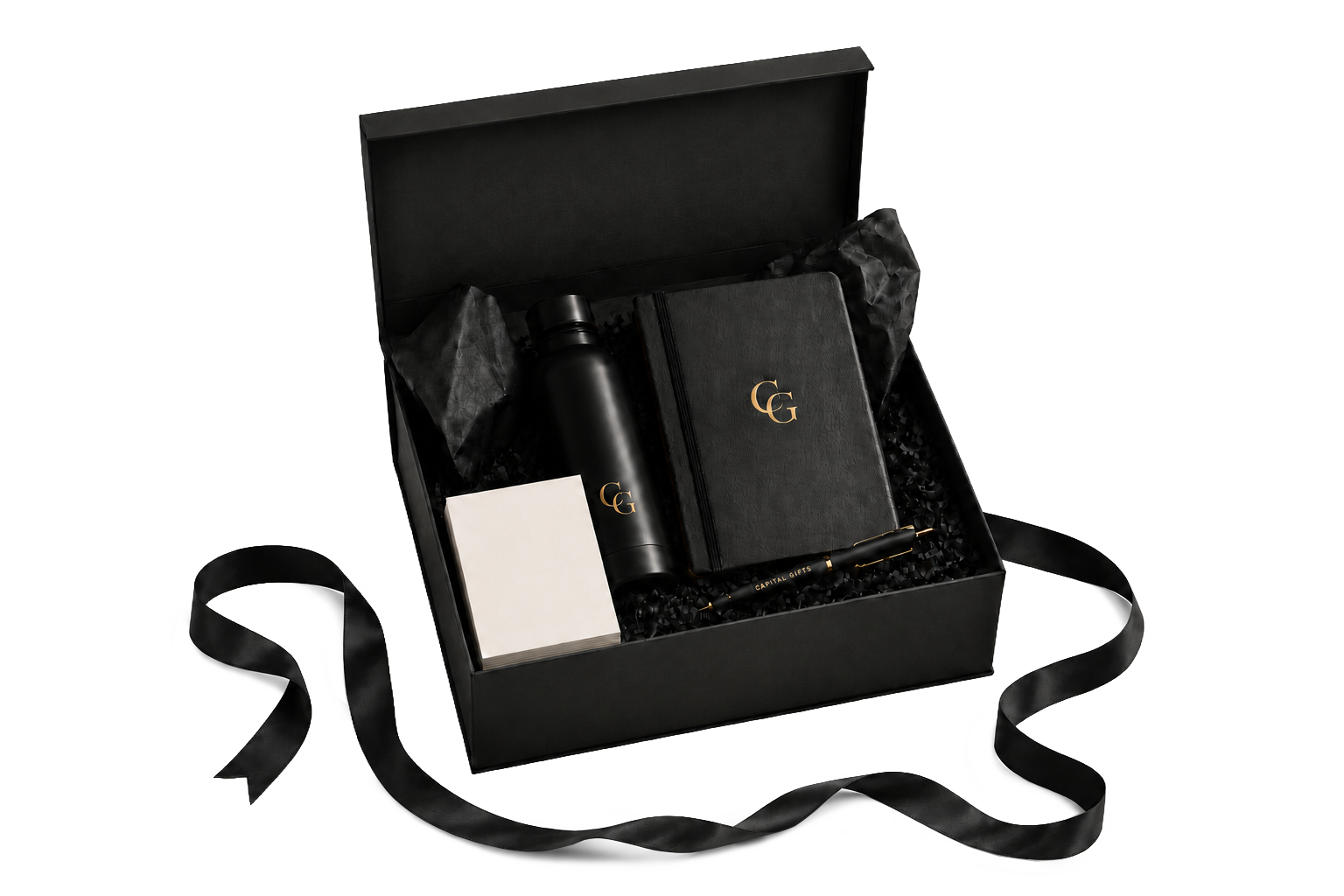
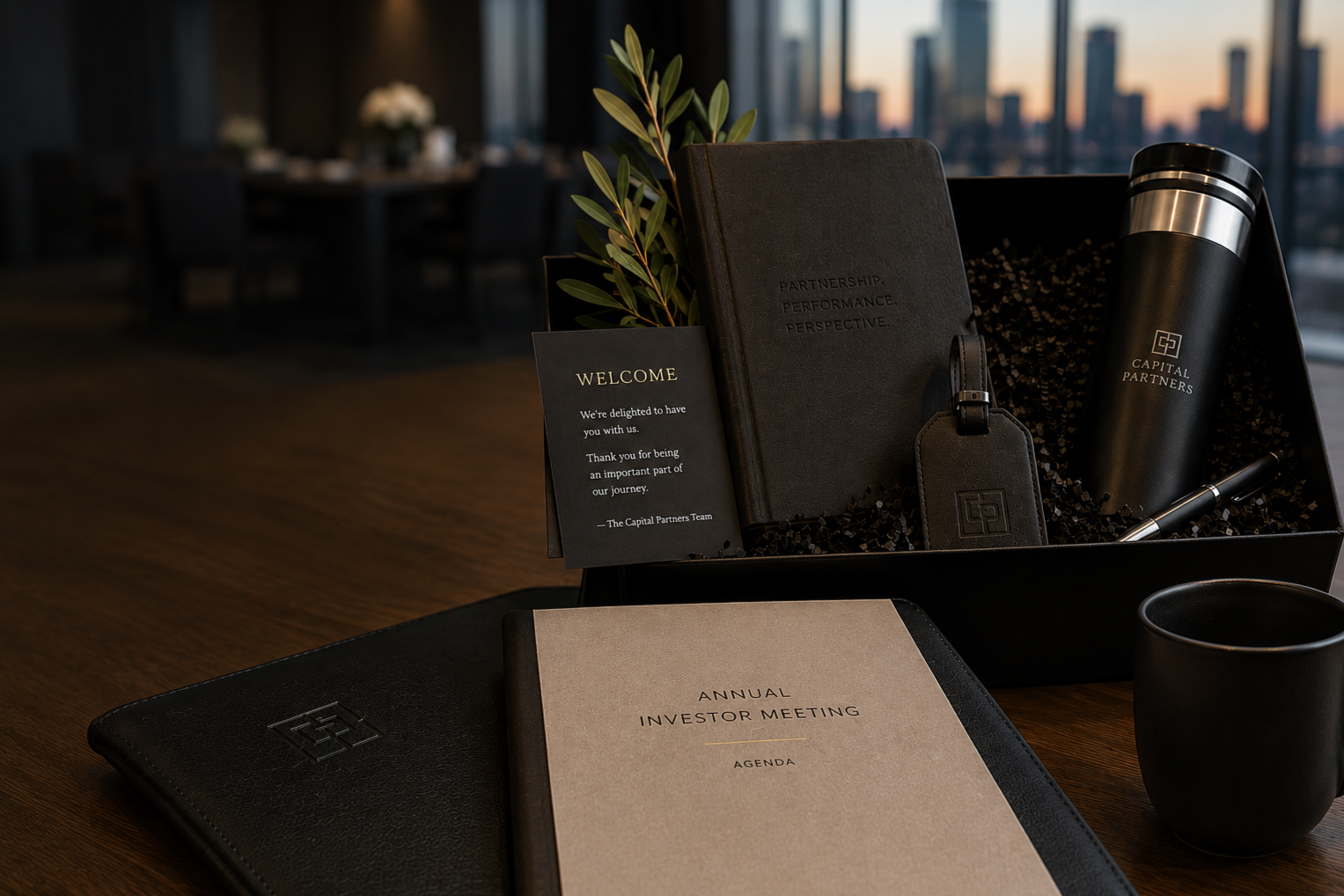
Long before the opening remarks, guests begin forming impressions. After a day of travel, arriving at a hotel to discover a thoughtfully prepared welcome package immediately sets a different tone. Rather than a generic gift bag filled with promotional items, consider an arrival experience that feels curated and personal. A welcome package might include:
- A handwritten welcome note from the firm's leadership.
- Premium meeting materials in a leather portfolio.
- A reusable drinkware piece for the event.
- Locally inspired snacks or specialty products.
- A detailed itinerary with nearby recommendations.
- A practical travel accessory for after the meeting.
The goal isn't extravagance. It's creating a moment that says, "We're glad you're here, and we've thought about every detail."
Registration That Feels Effortless
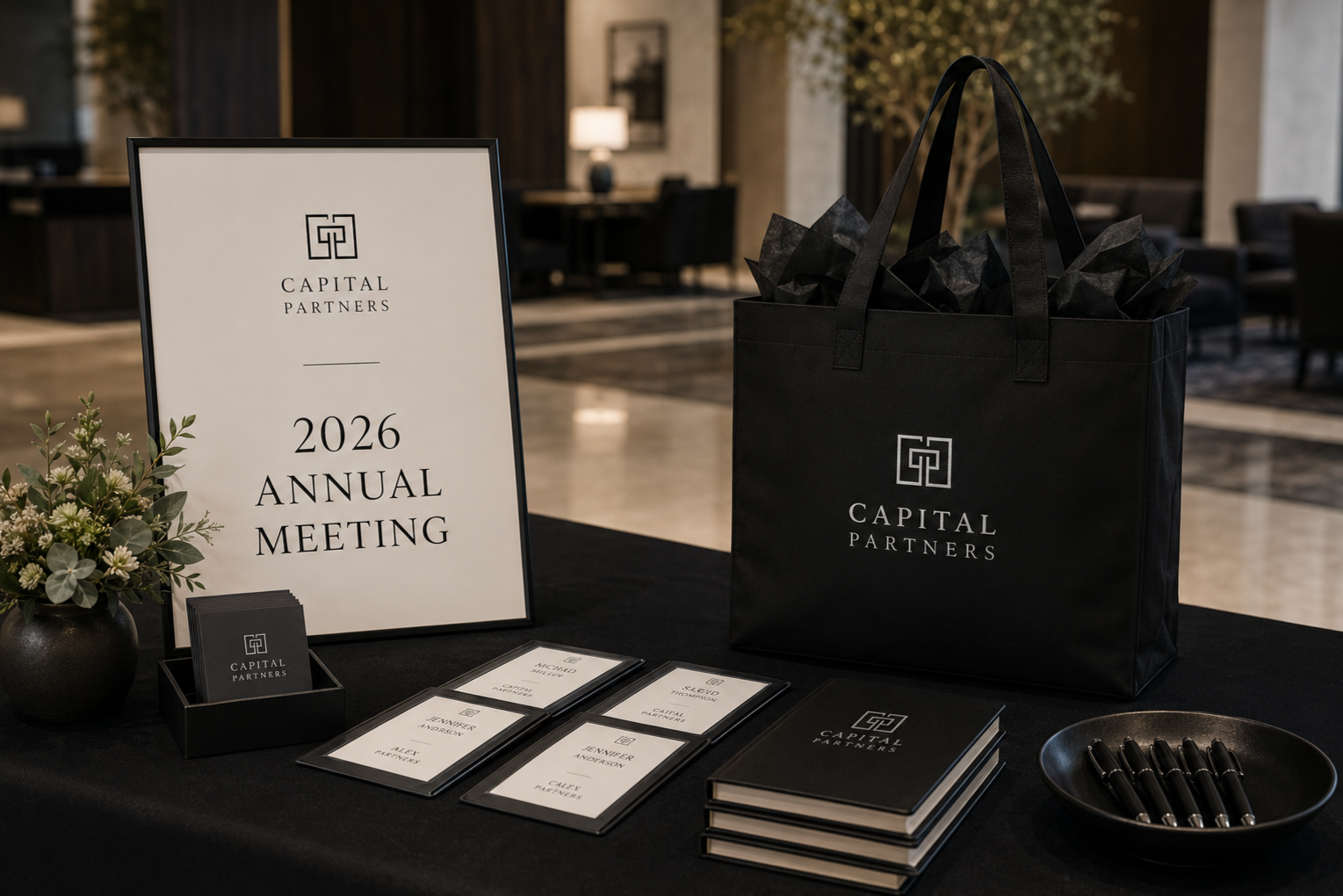
Registration is often the first in-person interaction attendees have with your team, and it should feel calm, organized, and welcoming. Simple improvements dramatically elevate the experience: clearly organized check-in stations, premium name badges and lanyards, beautifully presented meeting materials, clearly labeled schedules, refreshments available immediately upon arrival, and staff prepared to greet attendees by name. When registration runs smoothly, attendees can immediately shift their attention from logistics to conversation.
Meeting Materials Worth Keeping
Most conference materials are discarded before attendees even board their flight home. The best firms take a different approach, investing in items that remain useful long after the event concludes:
- Premium notebooks.
- Refillable journals.
- Leather portfolios.
- Executive pens.
- Personalized document holders.
- Thoughtfully designed meeting folders.
These pieces become lasting reminders of the event while continuing to reinforce the firm's attention to quality.
Hospitality Between Sessions
Some of the most valuable conversations happen outside the conference room — over coffee breaks, lunch, networking receptions, and walks between sessions. Thoughtful hospitality creates opportunities for those conversations to happen naturally. Comfortable meeting spaces, well-designed lounges, refreshments available throughout the day, and small moments of surprise all contribute to an environment where people enjoy spending time together. Those informal interactions often become just as valuable as the formal presentations.
Ending the Event on a High Note
The final impression matters just as much as the first. Rather than allowing attendees to simply check out and head to the airport, many firms choose to end the experience with a thoughtful departure gift. The best departure gifts are practical, understated, and designed to be used — not displayed: travel accessories, premium desk items, executive essentials, locally crafted products. The objective isn't branding. It's extending the relationship beyond the event itself. Months later, every time someone reaches for that item, they're reminded of the conversations, relationships, and experiences associated with your firm.
Limited Partner Meetings
Limited partner meetings differ from large annual conferences. They're often smaller, more focused, and centered on meaningful conversations rather than large presentations. Because these gatherings involve many of a firm's most important relationships, every detail deserves careful consideration. Rather than creating excitement through scale, successful LP meetings create confidence through thoughtful execution.
Create an Environment That Encourages Conversation
The best LP meetings don't feel rushed. Meeting spaces should encourage discussion rather than distraction: comfortable seating, natural lighting, exceptional food and beverage, quiet spaces for one-on-one conversations, and meeting materials that feel polished without becoming overwhelming. Every decision should support meaningful dialogue.
Understated Luxury Speaks Loudly
One of the most common mistakes organizations make is assuming luxury means excess. In reality, the most sophisticated experiences are often the most restrained — a beautifully crafted notebook, a personalized leather travel accessory, elegant packaging, high-quality materials, minimal branding. These details communicate confidence without trying to impress. For financial institutions in particular, subtlety often creates a stronger impression than highly branded promotional products.
Personalization Makes the Difference
Every LP relationship is unique, so whenever possible, personalize the experience. Include handwritten welcome notes, reference previous conversations where appropriate, recognize long-standing relationships, and tailor gifts based on the attendee rather than offering identical items to every guest. Personalization demonstrates attentiveness — and attentiveness builds trust.
Consistency Builds Credibility
Perhaps the most important characteristic of exceptional LP meetings is consistency. Every interaction should reinforce the same message: professional, prepared, thoughtful, dependable. When invitations, registration, meeting materials, hospitality, presentations, and follow-up all feel aligned, attendees leave with confidence not only in the event — but in the organization behind it.
The real purpose isn't to impress. It's to reinforce relationships built on trust.
Portfolio CEO Summits
One of the most valuable investments a private equity firm can make isn't in a company — it's in the relationships between the leaders who run those companies. Portfolio CEO summits have become increasingly common as firms look to foster collaboration, share best practices, and strengthen connections across their portfolio. Unlike investor meetings, these events are highly collaborative: executives aren't just listening to presentations, they're exchanging ideas, discussing common challenges, and building relationships with peers who understand the unique pressures of leading growth-stage businesses. The experience should reflect that purpose.
Design for Connection
Successful CEO summits aren't measured by the number of presentations — they're measured by the quality of the conversations that happen between sessions. The environment should encourage collaboration through comfortable meeting spaces, shared meals, breakout discussions, thoughtfully designed networking areas, and opportunities to continue conversations over coffee or evening receptions. Every detail should make it easier for leaders to connect with one another.
Welcome Executives as Guests, Not Attendees
After traveling from across the country — or around the world — executives appreciate a thoughtful arrival experience. A curated welcome package waiting in their hotel room immediately communicates that the event has been carefully planned. Rather than focusing on promotional products, think about what will genuinely improve their stay: meeting materials they'll use throughout the summit, travel essentials they'll appreciate during the trip, locally inspired hospitality, personalized welcome notes, and small details that reduce stress and help guests feel immediately at ease.
Create Moments That Continue Beyond the Meeting
The most memorable CEO summits create experiences people talk about long after they return home — an exceptional dinner in a unique setting, a fireside conversation with an industry leader, an outdoor networking activity, or simply an environment where executives have the time and space to build meaningful relationships. Thoughtful gifts can reinforce those experiences, but they should never overshadow them. The experience itself should always come first.
Executive Retreats
Executive retreats serve a different purpose than conferences. They're designed to slow things down. Away from daily responsibilities and constant interruptions, leadership teams have an opportunity to focus on long-term strategy, alignment, and decision-making. The most successful retreats create an environment where executives can think clearly, collaborate openly, and leave feeling energized.
Choose Simplicity Over Spectacle
Luxury doesn't need to be elaborate. In fact, many of the most successful executive retreats embrace simplicity: natural surroundings, comfortable meeting spaces, exceptional hospitality, beautifully designed materials, and thoughtful pacing. Every element should reduce distractions rather than create them. When executives feel comfortable, conversations become more productive.
Support the Entire Retreat Experience
A retreat begins well before the first meeting. Consider the complete guest journey — pre-arrival communication, transportation details, hotel check-in, morning coffee service, meeting environments, evening dinners, and departure. Each stage offers an opportunity to create a seamless experience. Providing guests with thoughtfully prepared itineraries, premium meeting materials, practical travel accessories, and personalized welcome gifts demonstrates the same attention to detail that defines successful organizations.
Hospitality Is Part of Leadership
One lesson shared by many exceptional event planners is that hospitality isn't separate from business — it supports it. When guests don't need to worry about logistics, they can focus entirely on the conversations that matter. Simple touches like refreshments appearing exactly when needed, meeting rooms prepared before attendees arrive, and personalized welcome experiences create an atmosphere where productive discussions can flourish.
Board Meetings
Board meetings are often among the smallest events a firm hosts. They're also among the most important. These meetings bring together investors, advisors, executives, and board members responsible for guiding the long-term direction of portfolio companies. Because attendance is limited, every interaction becomes even more personal.
Thoughtful Details Reflect Professionalism
Board members often attend numerous meetings throughout the year, so creating a polished, organized experience demonstrates respect for their time. Meeting materials should be carefully prepared, spaces should be comfortable and free from distractions, and hospitality should feel effortless. Every element should reinforce confidence in the organization.
Practical Gifts Leave the Strongest Impression
For board meetings, understated gifts are often the most effective. Rather than selecting highly branded promotional items, many organizations choose practical executive essentials that become part of a board member's daily routine:
- High-quality notebooks.
- Executive desk accessories.
- Travel organizers.
- Premium writing instruments.
- Personalized leather goods.
These items are valued because they're useful — not because they display a logo.
Welcoming a Newly Acquired Portfolio Company
Few moments are more significant than the closing of an acquisition. For the acquiring firm, it's the beginning of a new partnership. For employees and leadership teams, it's often a period of uncertainty. Thoughtful onboarding experiences help establish trust from day one.
Start the Relationship with Intention
The first few weeks following an acquisition set the tone for the partnership ahead. Simple gestures can communicate transparency, professionalism, and commitment: welcome letters from firm leadership, executive onboarding materials, thoughtfully assembled welcome kits, and resources that help employees understand the firm's vision. Rather than feeling like an outside investor has arrived, employees should feel like they're joining a partnership.
Different Audiences Require Different Experiences
Not every onboarding package should look the same. Consider tailoring experiences for executive leadership, board members, department leaders, and new employees. Each audience has different responsibilities, expectations, and information needs — and personalization demonstrates that your firm understands those differences.
Holiday Programs
Holiday gifting remains one of the most visible opportunities to strengthen professional relationships. For private equity firms, holiday programs often extend across multiple audiences — limited partners, portfolio company executives, board members, employees, and advisors. The most successful programs begin planning months in advance and focus on quality rather than quantity.
A Gift Should Reflect the Relationship
Not every recipient should receive the same experience. A long-term investor may deserve a highly personalized executive gift; employees may appreciate curated seasonal experiences; portfolio company leadership might receive practical gifts that acknowledge another successful year together. Thoughtful segmentation allows each gift to feel intentional rather than generic.
Focus on Meaning, Not Marketing
Holiday gifts should never feel like advertisements. Subtle branding, exceptional presentation, personalized messaging, and premium quality consistently create stronger impressions than oversized logos or novelty items. Ultimately, holiday gifting isn't about closing the year with a transaction — it's about reinforcing relationships that will continue into the next one.
Frequently Asked Questions
How far in advance should firms begin planning a gifting program?+
Should gifts be personalized?+
What makes a corporate gift feel premium?+
How much branding should be included?+
What types of events benefit from thoughtful gifting?+
Should every attendee receive the same gift?+
Is event gifting only appropriate for large firms?+
How do firms manage logistics for large events?+
Final Thoughts
Exceptional private equity events aren't remembered because they included expensive gifts. They're remembered because every detail reflected the professionalism, preparation, and values of the organization behind them. From the invitation to the departure experience, thoughtful planning creates an environment where relationships can grow.
Whether you're welcoming limited partners to an annual meeting, bringing portfolio executives together for a leadership summit, onboarding a newly acquired company, or hosting a board retreat, every interaction contributes to your firm's reputation. Thoughtful gifting is simply one expression of thoughtful leadership. When approached strategically, it reinforces trust, strengthens relationships, and extends the impact of the event long after everyone has returned home.