

Executive Summary
Executive retreats create something increasingly difficult to find in today's business environment: uninterrupted time for leadership teams to think strategically, strengthen relationships, and align around the future.
The best retreats aren't remembered because of extravagant destinations or expensive gifts. They're remembered because every detail — from the venue selection and arrival experience to the meeting environment and hospitality — feels intentional.
When executives can step away from the day-to-day, meaningful conversations happen more naturally, better decisions are made, and teams return with greater clarity and alignment.
This guide shares practical recommendations for planning executive retreats that are productive, memorable, and thoughtfully executed from beginning to end.
Experience Blueprint
Every exceptional retreat moves through the same seven stages. Treat each as an opportunity to reinforce the same message — that every detail has been considered.
Section 03Define the Purpose Before You Plan the Retreat
One of the biggest mistakes organizations make is beginning with logistics. They compare venues, review catering menus, and build agendas before answering the most important question: Why are we bringing everyone together?
Every successful executive retreat starts with a clearly defined objective. Whether the goal is strategic planning, leadership alignment, innovation, or relationship building, that purpose should guide every decision that follows. Before planning begins, define what success looks like. Ask questions like:
- What decisions need to be made?
- What conversations are difficult to have in the office?
- What relationships need to be strengthened?
- What should attendees remember six months from now?
When the purpose is clear, choosing the right destination, agenda, and guest experience becomes significantly easier.
Before researching venues, ask your leadership team to identify the three most important outcomes they want to achieve during the retreat. Every planning decision — from the location to the meeting format — should support those outcomes.
Section 04Choose a Destination That Supports the Experience
The right destination isn't necessarily the most luxurious. It's the one that helps your leadership team focus.
Look for destinations that are easy to reach, offer exceptional service, and provide spaces where meaningful conversations can happen naturally. Comfortable lounges, outdoor gathering areas, private dining rooms, and beautiful meeting spaces often contribute more to the experience than elaborate amenities. The environment should encourage executives to slow down, think differently, and connect with one another outside the boardroom.
Executive checklist
- ✓Convenient airport access
- ✓Comfortable meeting spaces with natural light
- ✓Areas for informal conversations
- ✓Excellent food and hospitality
- ✓Reliable technology
- ✓Outdoor spaces for reflection or walking meetings
- ✓Service that feels effortless
The best executive retreats balance productivity with breathing room. Avoid venues where attendees spend more time navigating the property than engaging with one another.
Section 05Create an Arrival Experience That Sets the Tone
The retreat doesn't begin with the opening presentation. It begins the moment your guests arrive.
After a day of travel, executives aren't thinking about the agenda. They're thinking about checking in, settling down, and preparing for the next few days. A thoughtful arrival experience removes uncertainty and immediately creates a sense of calm. From transportation and hotel check-in to the welcome package waiting in their room, every detail should communicate the same message: "We've thought of everything." That confidence allows attendees to shift their focus away from logistics and toward the conversations that matter.
What Makes a Great Arrival Experience?
The best arrival experiences are simple, polished, and effortless. Consider including:
- Pre-arrival communication with travel details and itinerary.
- Seamless airport transportation or parking instructions.
- A personalized welcome note.
- Premium meeting materials already waiting in the guest room.
- Locally inspired refreshments or snacks.
- A printed agenda with key locations and times.
- An informal welcome reception before the first session.
Remember, the objective isn't to impress guests with expensive gifts. It's to make them feel welcomed.
Executive checklist
- ✓Guests know exactly where to go upon arrival.
- ✓Welcome package waiting in the room before check-in.
- ✓Refreshments available after travel.
- ✓Clear agenda and meeting locations.
- ✓Time built into the schedule to unwind before the first session.
One of the simplest ways to elevate an executive retreat is to have welcome packages waiting in guest rooms before attendees arrive. Discovering a thoughtfully prepared welcome experience in a quiet moment feels far more personal than handing out gifts during registration.
Keep the welcome experience focused. One beautifully presented notebook, a premium pen, a handwritten note, and a practical travel item often create a stronger impression than a box filled with promotional products.
Common mistakes to avoid
- ✕Waiting until the first meeting to distribute welcome gifts.
- ✕Overloading welcome boxes with unnecessary items.
- ✕Forgetting practical information like Wi-Fi details or meeting locations.
- ✕Treating every attendee the same instead of personalizing for first-time guests, speakers, or executives.
- ✕Using oversized or highly branded items that feel promotional rather than premium.

Section 06Design a Meeting Environment That Encourages Better Conversations
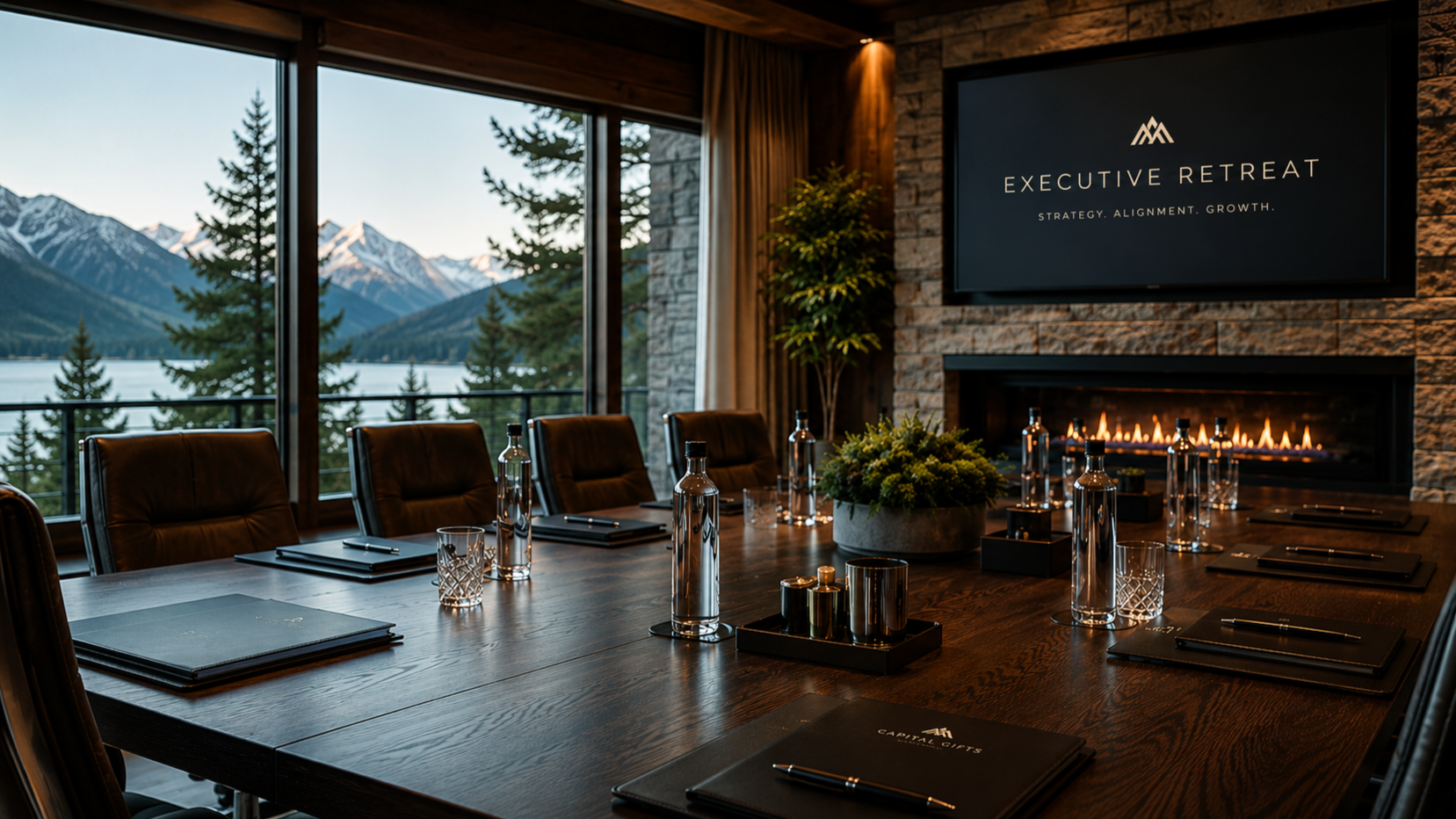
The meeting room is more than a place to present information. It's where ideas are shared, decisions are made, and relationships are strengthened.
A thoughtfully designed environment helps executives stay engaged, collaborate more naturally, and remain focused throughout the day. Small details — often overlooked — can have a significant impact on the overall experience. The goal isn't to create an impressive room. It's to create a productive one.
Focus on Comfort and Function
Executives spend hours in meetings. The environment should support that. Prioritize:
- Natural light whenever possible.
- Comfortable seating.
- Spacious room layouts.
- Refreshments that are always available.
- Easy access to power and Wi-Fi.
- Clean, uncluttered meeting tables.
- Proper temperature control.
- Notebooks and pens ready before attendees arrive.
The fewer distractions in the room, the easier it is for people to focus on the conversation.
Encourage Conversation, Not Just Presentations
Traditional classroom seating encourages people to sit quietly. Executive retreats should encourage discussion. Whenever possible, consider layouts that make collaboration easier — boardroom tables, hollow square seating, U-shaped layouts, and small round tables for breakout discussions. The room should invite participation, not simply observation.
Executive checklist
- ✓Comfortable seating for full-day sessions.
- ✓Natural light or well-balanced lighting.
- ✓Water, coffee, and refreshments replenished throughout the day.
- ✓Meeting materials prepared before guests arrive.
- ✓Technology tested before each session.
- ✓Space for breakout conversations.
- ✓Room reset between sessions.
Your meeting room should look exactly the same at the start of every session. Refresh beverages, replace used notepads, organize materials, and straighten chairs during every break. Executives notice consistency — even if they never mention it.
Consider replacing traditional conference folders with premium notebooks or leather folios that attendees will continue using long after the retreat. Practical meeting materials create far more lasting brand impressions than disposable packets.
Common mistakes to avoid
- ✕Overcrowded room layouts that make discussion difficult.
- ✕Dim meeting spaces with little natural light.
- ✕Waiting for attendees to ask for coffee or water.
- ✕Cluttered tables filled with unnecessary materials.
- ✕Technology that hasn't been tested before the session begins.
- ✕Long presentation blocks with no opportunities for discussion or movement.
Section 07Executive Welcome Experiences & Room Drops
The best welcome experiences don't begin with a gift. They begin with a feeling.
When an executive opens the door to their hotel room after a day of travel, they should immediately feel welcomed, prepared, and excited for the days ahead. A thoughtfully curated room drop does more than provide useful items — it communicates that every detail has been considered before the first meeting even begins.
Design Around the Guest Experience
Before selecting products, ask a simple question: "What would make our guests' next 48 hours more enjoyable?" The answer should guide every decision. Instead of filling a box with promotional merchandise, focus on items that are practical, beautifully presented, and genuinely useful throughout the retreat. The experience should feel intentional — not promotional.
Less Is Almost Always More
Executive audiences appreciate quality over quantity. One exceptional notebook they'll use for years creates a stronger impression than five inexpensive giveaways. The same principle applies to apparel, travel accessories, drinkware, and other welcome items. Choose fewer pieces. Choose better pieces. Present them beautifully.
Choose fewer pieces. Choose better pieces. Present them beautifully.
Executive checklist
- ✓Personalized welcome note.
- ✓Premium meeting materials.
- ✓One or two thoughtfully selected gifts.
- ✓Printed itinerary and key event information.
- ✓Local or destination-inspired touch.
- ✓Beautiful presentation.
Every item in a welcome package should answer one question: "Will this make the guest's experience better?" If the answer is no, leave it out.
Resist the temptation to over-brand executive gifts. Subtle branding, premium materials, and elegant packaging create a far more lasting impression than oversized logos.
Common mistakes to avoid
- ✕Filling welcome boxes with inexpensive promotional items.
- ✕Including products that don't support the retreat experience.
- ✕Using oversized or highly visible branding.
- ✕Forgetting to personalize the welcome.
- ✕Prioritizing quantity over quality.
Section 08Build an Agenda That Creates Space for Conversation
Executive retreats aren't designed to maximize meeting time. They're designed to maximize leadership time.
One of the most common mistakes organizations make is filling every hour with presentations, leaving little opportunity for reflection or informal conversation. While structure is important, so is flexibility. Some of the most valuable moments happen over breakfast, during a coffee break, or while walking between sessions. Build your agenda with enough breathing room for those conversations to happen naturally.
Executive checklist
- ✓Limit presentation sessions to 60–90 minutes.
- ✓Schedule meaningful breaks throughout the day.
- ✓Use meals as opportunities for conversation.
- ✓Leave time for informal networking.
- ✓End each day with clear next steps.
If your agenda is full from breakfast to dinner, it's probably too full. Protect white space in the schedule — it's often where the strongest relationships are built and the best ideas emerge.
Common mistakes to avoid
- ✕Turning the retreat into a series of back-to-back meetings.
- ✕Scheduling breaks that are too short to be useful.
- ✕Filling every meal with presentations.
- ✕Prioritizing content over conversation.
Section 09The Experience Doesn't End When the Retreat Does
A successful executive retreat doesn't end when attendees head to the airport. The days and weeks that follow are an opportunity to reinforce the relationships, ideas, and momentum created during the retreat.
A thoughtful follow-up reminds attendees that the experience was more than a meeting — it was an investment in your leadership team. Simple gestures can have a lasting impact, from sharing event photography and key takeaways to sending a handwritten thank-you note or a thoughtful departure gift. The goal isn't to extend the event — it's to reinforce the relationships built during it.
Executive checklist
- ✓Send a thank-you message within 48 hours.
- ✓Share presentation materials and key takeaways.
- ✓Distribute event photography.
- ✓Assign ownership for action items.
- ✓Continue conversations started during the retreat.
End the retreat as intentionally as you began it. A personalized thank-you note or thoughtfully selected departure gift gives attendees one final reminder of the experience — and reinforces your organization's commitment to thoughtful leadership.
Common mistakes to avoid
- ✕Treating the retreat as a one-time event instead of the beginning of ongoing conversations.
- ✕Waiting weeks to send follow-up communication.
- ✕Forgetting to document key decisions and next steps.
- ✕Missing the opportunity to thank attendees for their time and contributions.
Frequently Asked Questions
How far in advance should we begin planning an executive retreat?+
What is the ideal size for an executive retreat?+
How long should an executive retreat last?+
Should we include executive welcome gifts?+
How much branding should we include?+
What makes an executive retreat memorable?+
Should every minute of the retreat be scheduled?+
Can Capital Gifts help even if we already have an internal events team?+
Final Thoughts
The most memorable executive retreats aren't defined by where they're held or how much is spent. They're remembered because every detail supports a single objective: creating an environment where leaders can think clearly, build stronger relationships, and make better decisions together.
From selecting the right destination to designing thoughtful arrival experiences, preparing productive meeting environments, and creating meaningful follow-up, every touchpoint contributes to the overall experience. When planned intentionally, an executive retreat becomes more than a meeting. It becomes an investment in your people, your culture, and the future of your organization.